
Why is art usually cast in bronze?
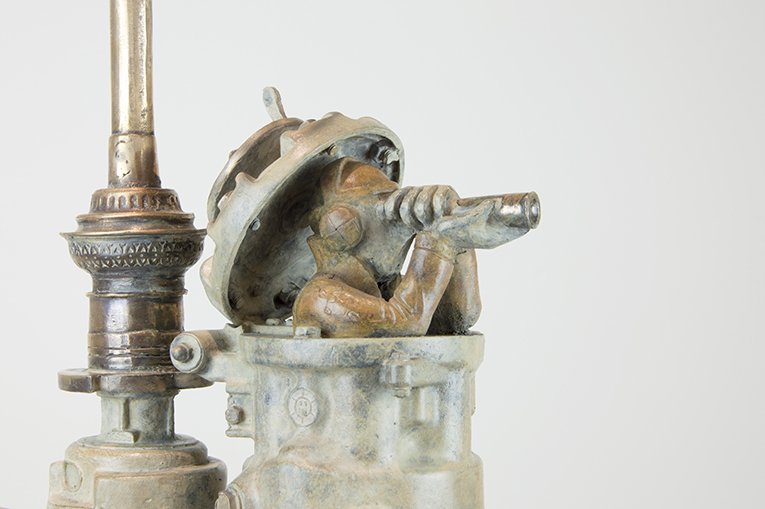
A logical choice with a long history
When one thinks of a classical sculpture, one almost automatically thinks of bronze. From ancient sculptures to contemporary art: bronze remains the material par excellence for cast artworks. But why is that? Why not cast iron, brass, or another metal? The answer lies in a unique combination of technique, aesthetics, and tradition.
Bronze: an exceptional casting material
One of the main reasons is purely technical. Bronze is exceptionally castable. It flows smoothly into the mold, fills fine details effortlessly, and shrinks relatively little during cooling. This allows for the precise translation of complex forms, thin structures, and subtle textures from the original model to the final artwork.
For artists, this means freedom. Ideas do not need to be simplified to remain “castable”. For the founder, it means reliability and control — an essential advantage for unique or limited-edition works.
Strong, but not brittle
Bronze combines strength with a certain elasticity. This makes it extremely suitable for sculptures with protruding or slender parts, such as arms, fingers, or dynamic movements. Compared to cast iron, which is more brittle and breaks more easily, bronze offers greater structural safety without becoming visually heavy.
Durability over time
An artwork is meant to last. Here too, bronze performs exceptionally well. Instead of corroding destructively, bronze forms a stable patina that protects the underlying material. This natural aging is not seen as damage, but as character.
Furthermore, the patina can be deliberately controlled. The color, depth, and nuance of the surface are an integral part of the artistic expression. This is a significant difference from, for example, iron, which rusts and structurally deteriorates, or some copper alloys that discolor unpredictably.
The aesthetics of bronze
Bronze has a warm, timeless appeal. The material captures light in a unique way and allows for a wide range of finishes: from deep dark brown to green, black, or subtly modulated hues. This visual richness makes bronze particularly popular among artists who place great importance on the surface and 'skin' of their work.
The power of tradition
In addition to all technical and aesthetic reasons, history also plays a role. Bronze has been used for statues, monuments, and art objects since antiquity. Through this long tradition, bronze has become a cultural reference material. For collectors, museums, and clients, a bronze sculpture often stands synonymous with durability, value, and “definitiveness”.
This expectation still exists today, even in contemporary art.
Why not cast iron or brass, then?
Other metals certainly have their place, but come with clear limitations.
Cast iron is strong and relatively inexpensive, but it is heavy, brittle, and prone to rust. Consequently, it is more often used in architectural or industrial contexts than in fine sculptural work.
While brass is technically castable, it is softer and less stable in the long term. It deforms more easily and, for many artists, lacks the depth and gravitas that bronze offers.
A deliberate choice
It is no coincidence that bronze has endured in the art world for thousands of years. The material stands precisely at the intersection of technical reliability, aesthetic possibilities, durability, and cultural significance.
For artists and foundries alike, bronze is therefore not merely a tradition, but a conscious, well-considered choice — time and again.
